RAG vs. Agentic RAG: Architecture, Tradeoffs, and How to Choose
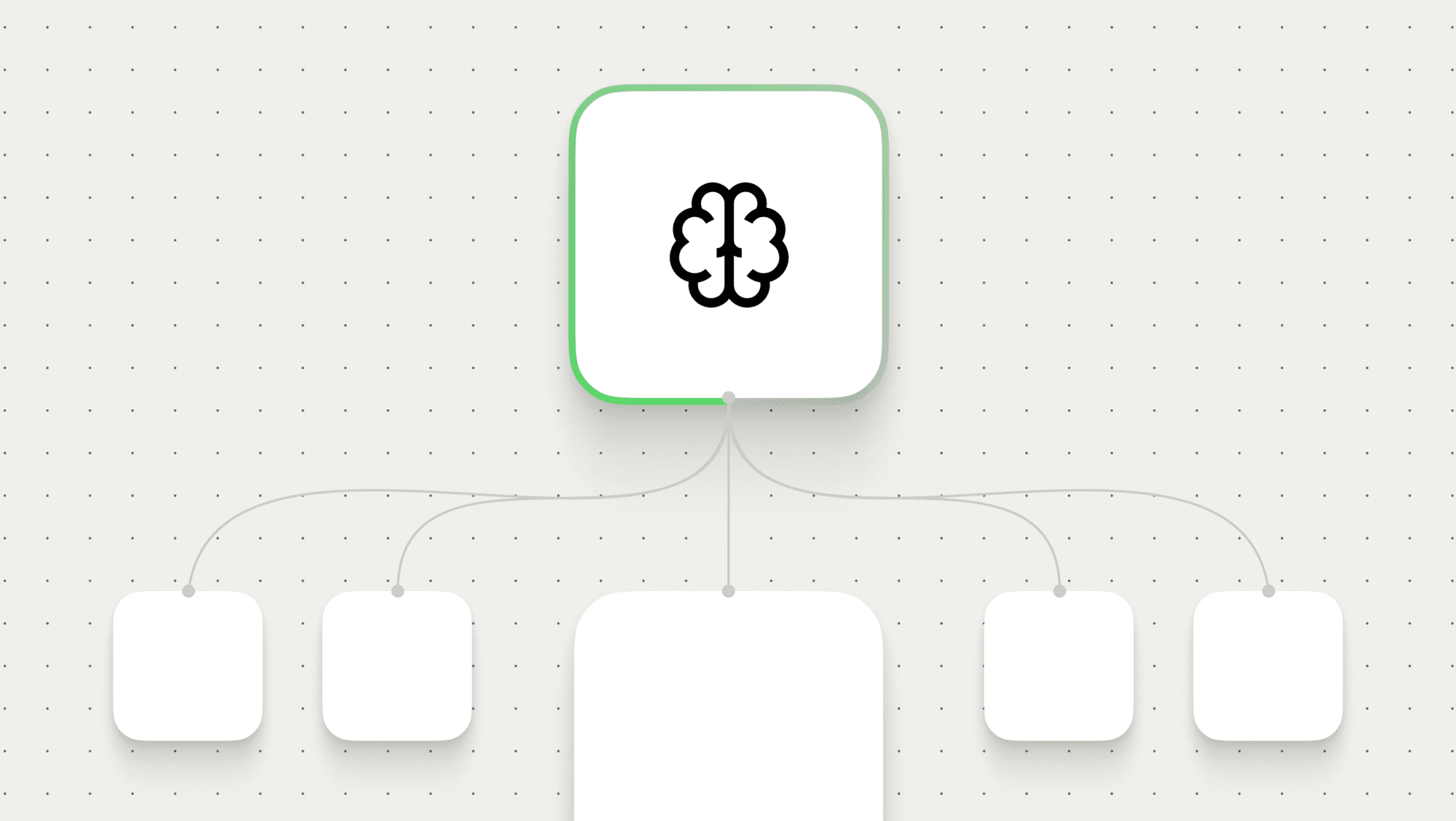
Classic RAG hits a wall on multi-hop and ambiguous queries. Learn how agentic RAG turns retrieval into a control loop, and when the tradeoffs are worth it.
Últimas noticias del ecosistema n8n y de la automatización.

Classic RAG hits a wall on multi-hop and ambiguous queries. Learn how agentic RAG turns retrieval into a control loop, and when the tradeoffs are worth it.

Understand AI data pipeline architecture, from ingestion and feature engineering to model training and orchestration. See where n8n fits in the stack.

The AI maturity framework in Section 2 may suggest a smooth, linear progression. The reality is different. Organizations do not advance evenly through these levels. There is a specific transition point where most enterprises stall, and understanding why is how anyone can reliably

Discover enterprise AI agent governance. Inventory agents, enforce least-privilege access, and add runtime guardrails for security at the workflow level.

Learn how to implement an AI audit trail for production workflows. Discover how execution records and data usage tracking ensures governance.

Explore fine-tuning versus RAG to understand how they differ, when each approach works best, and why many production LLM systems use both.

Should you build it with Claude Code or n8n? Five questions that let you answer for your own situation, from someone who uses both daily.

Compare compliance automation software, including features, trade-offs, and how to build flexible workflows with n8n on infrastructure you control.

After spending the past couple of months looking at hundreds of tech docs from n8n, Google, Gumloop, and the rest, I tallied up 75 capabilities you’d expect an agent development tool to offer. But there are so many more things you can, need, or should do to agents

Build an AI-powered incident response workflow with n8n. Combine RAG, threat intelligence, and historical incidents to accelerate SOC investigations.

Learn how AI security monitoring works from both sides. Discover the unique AI risks and the strategies engineers use to automate detection and response.

Context engineering for LLMs goes beyond prompt design. Learn how to manage context rot, budget tokens, and build reliable production AI agents with n8n.

Learn how AI agent memory works, from in-context buffers to vector stores. Discover how to build persistent memory into real-world agent workflows at scale.

This guide to LLM tool calling error handling covers how to classify failures, implement smart retries, design fallbacks, and wire circuit breakers.

This practical guide to agentic AI design patterns covers validation, governance, context management, error recovery, and cost control in production.

Map MCP server security risks and apply the controls that matter: auth, tool-call scoping, observability, and mitigation strategies.

Compare the 10 best vector databases for RAG and AI pipelines. Evaluate your options on scale ceiling, metadata filtering, overhead, and architectural fit.

When a review run falls short, this workflow catches it and proposes a fix to the skill, then writes the improved instructions back once you approve the diff.

The following framework allows leadership to benchmark their organization across five distinct stages. Each level is assessed across four dimensions: Usage (who is using AI and how broadly), Sophistication (what types of tasks AI handles), Governance (what controls and policies a

What you want from us, and how we want to support you.

Deep dive into the A2A protocol: Explore specification-level components, failure modes, and how it enables enterprise-grade AI orchestration at scale.

Learn how LLM routing improves accuracy, latency, and cost with per request model selection. Optimize pipelines, and use the right tool every time.

Compare top AI governance tools for enterprise compliance. Review platform capabilities, different vendors, and key criteria to choose the right fit.

Explore the top process orchestration tools, understand their key capabilities, tool reviews, and criteria to choose the right platform for your stack.

Your first AI agent worked great. Then you added three more and the system became impossible to debug. This post covers multi-agent architectures, sub-workflow composition, memory management, and failure handling patterns that keep complex agent systems modular and production-rea

Explore the most common integration patterns for data and enterprise systems. Learn their uses, key tradeoffs, and ways to combine them in production.
Understand what LLM observability is and which metrics to track. Maintain a visible trail, iterate your process, and close a solid feedback loop.

Germany's most valuable AI startup announces its commitment during London Tech Week, building on a year in which its UK team has already tripled in size LONDON and BERLIN, 9 June 2026 – n8n, the AI orchestration platform, today announced a target of 200 UK-based employees by

n8n now supports OpenTelemetry natively, allowing every workflow execution to be emitted as a trace, so n8n shows up inside the same observability stack your team already uses for the rest of production. There is no sidecar to run and no patching to maintain, and because everythi

Knowing your agent is running is different from what it's doing. Learn how to monitor AI agents in production: structured outputs, memory state and early warning signals.
Discover what AI hallucinations are, how LLMs generate them, and which types matter in production. Learn how to reduce them and create a reliable pipeline.
Compare the top cloud integration platforms for enterprise IT. Evaluate deployment models, connector depth, and governance, and see where n8n fits.

Discover data mapping best practices for cross-system integration at scale and learn how automating with n8n ensures reliable, production-grade data flows.

Learn which AI agent metrics to track and how to match them to your deployment stage. Discover execution, quality, efficiency, and safety metrics with practical tracking guidance for n8n.

AI agents often hallucinate without generating errors. Learn to debug agents by filtering execution logs, inspecting traces and tweaking LLM parameters.